
What is Wildlife Tracking?
Updated: Aug 16

Wildlife Tracking is the art and science of reading the 'book of nature'.
Literally speaking, Wildlife Tracking is the practice of observing the foot prints of animals, following their trails, and discovering the signs they have left behind.
Written in the sand, left in the leaves, scratched into the bark, and drifting on the wind, through awareness of the tracks and sign of animals, we learn to perceive the diversity of magnificent wild beings interacting with the landscape and each other. We learn about their world, what they eat, where they sleep, and get a peak into their lifestyle. In time, we develop the felt sense of connection with wild Nature, and come to understand our own place in relationship to the living landscape.
Who is Wildlife Tracking for?
Wildlife Tracking is for everyone! Especially if:
you love animals and long to connect with the wild ones
you seek to deepen your relationship with more-than-human Nature and the Earth
you want to develop your natural intuition in a grounded way
you long for a sense of belonging in Nature
Everyone is a Tracker
Wildlife tracking has only very recently in the scale of evolutionary history become obscure to pop culture. Before humans moved indoors and onto pavement, separating our daily rhythms from more-than-human reality, Wildlife Tracking was innate to our way of being in the world and absolutely mandatory for our survival as a species. We needed to know when the Grizzly Bear, Tiger, or Wolves were nearby so we could manage ourselves appropriately, and we needed to know where to find the Deer and Antelope to feed and clothe our people. Today, hunters continue to track, as do people living close to the Earth.
Wildlife Tracking is a natural part of being human! Because of this, even when there is not an immediate obvious need, such as safety or hunting, you will find it is an extremely satisfying endeavor. Following a Deer trail to the spot where it ate down the Blackberry vines then rested in the grass in the morning sun, or seeing the many digs where the Red Fox hunted for a meal then finding one tiny foot of a Mouse left from its success, or even just one stroke of a Owl wing in the sand amongst a scattering of Mouse tracks... the land is full of fascinating stories to be discovered.

Many bobcat trails leading in and out of this small area amongst sand dunes.
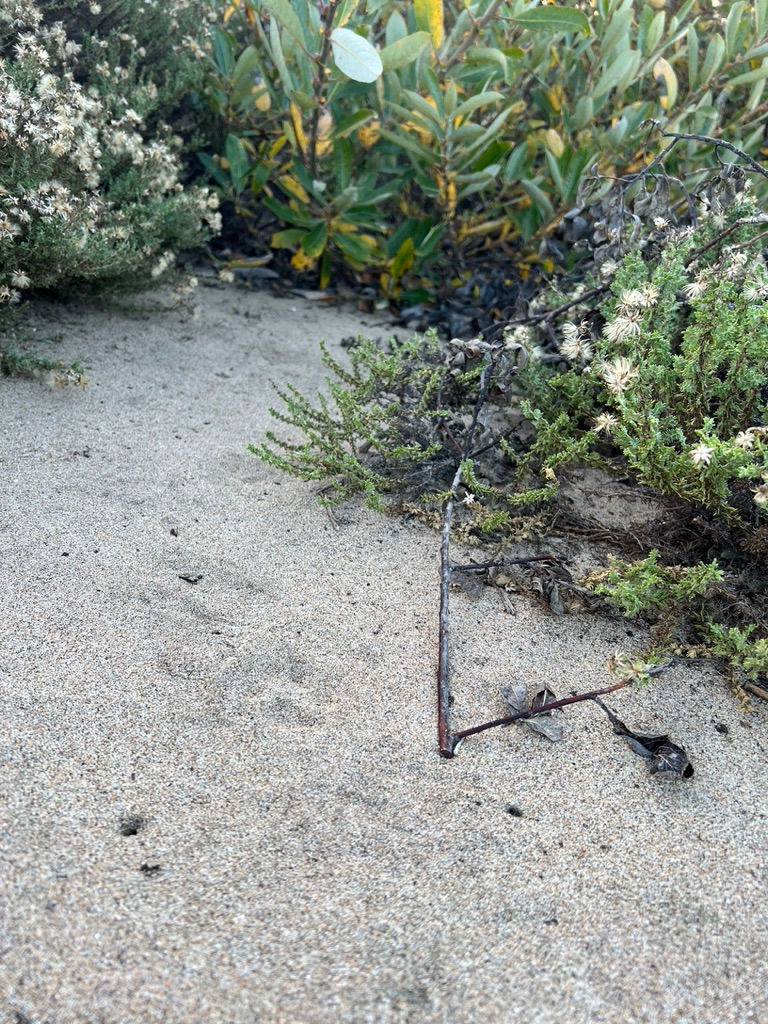
Some trails continued through thick vegetation heading out to hunting grounds in the distance, while others ducked into the nearby bushes for safe cover as in the photo on the right. (Sarah Fontaine, 2022)
The capacity to track wild animals, to identify a species by the shape of their track, to follow a fresh trail and discover where that animal is on the landscape, and so much more, lives within each of us. It is baked in to our nervous system and sensory processing systems, waiting to be awakened.
Actually, we continue to employ our tracking faculties all the time. We are tracking in every moment — we track the clock, the movement of traffic, the rhythm of music, we track each others’ body language, the flavor of food, and the scents on the air. We are neurologically wired to track our environment and what is important to us.
Simply put, tracking is the act of bringing our awareness to something — a person, a place, a pattern — and tuning in to what is happening within that given context. We are constantly picking up information from our environment through our physical senses and our extended nervous system. Our body and brain interpret that information through the filter of our personal experience to generate meaning, to understand, and to learn.
Why Track the Wild?
Tracking is a natural function of our nervous system, it's in all of us, and it is designed to be used in the wild.
What we track defines our sense of reality. What we pay attention to and focus our minds on informs our brain, body and nervous system on how we relate to the world. Tracking the troubles in the world informs us in an important way, but if that is all we are tracking we limit ourselves to a narrow and distressing view of reality.
Turning our awareness to the beauty and majesty of the natural world opens us to the rich experience of being in the present moment, of being here on this Earth, of being part of this creation. In true connection with the wild world we access within ourselves the ability to be captivated — to be swept by the awe of a snowcapped mountain range, the majesty of the animal kingdom, the wonder of a beautiful sunset, and the joy of bird song. We become filled with genuine gratitude for simply being part of it all.
Connecting with our Wild Relations
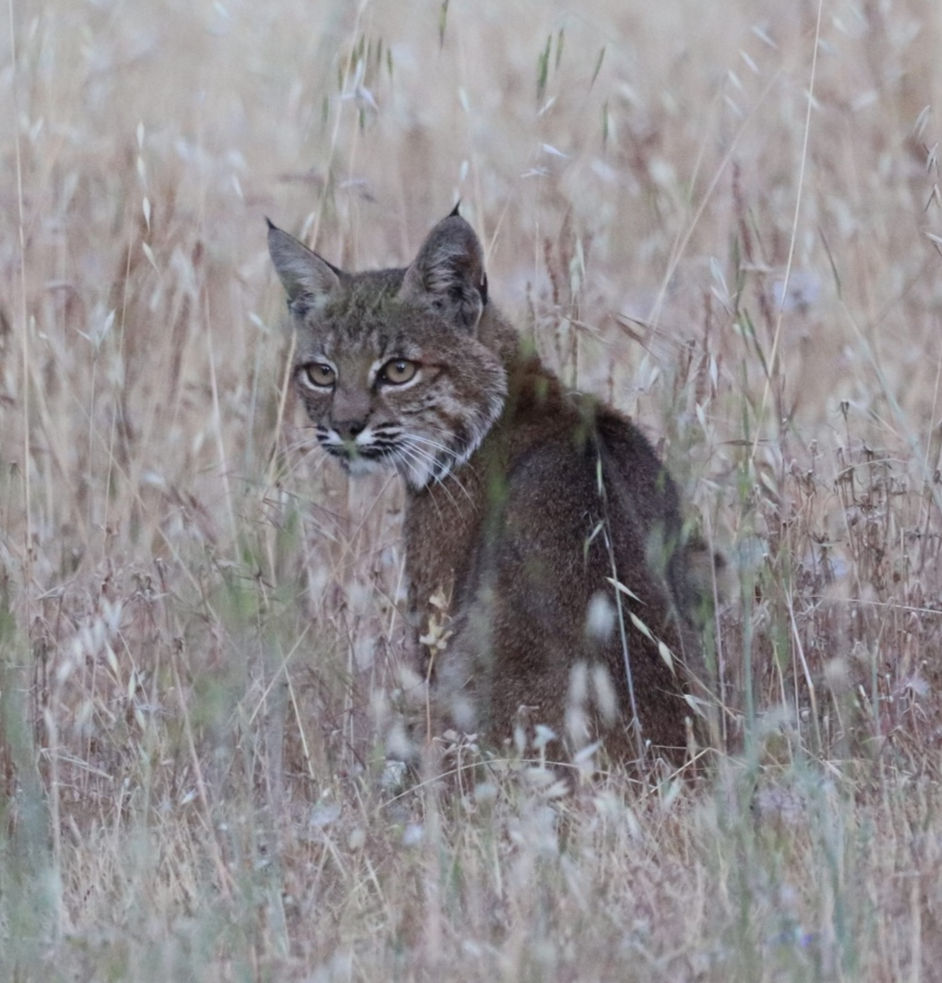
Tracking brings us the opportunity to connect with that which we are tracking. In Wildlife Tracking, we can choose to connect with the trees, birds, waters and any aspect of the natural world that comes into our awareness. Even the elusive ones like the Wolves, Jaguars, Bears, and Pumas, we can come to know not only in the rare chance of seeing their bodies, but by discovering their footprints and following their trails.
We can choose to look even deeper, to attune to the other, allow curiosity to emerge, ask questions, and seek to explore each wild being's unique perspective of reality.
From the place of connection, we can build relationships within the natural world, share experiences, learn how to listen deeply, and to communicate naturally.
Belonging to the Earth
So many of us are out of touch with our wild relatives and are longing to walk in relationship with all of Nature as our ancestors once did. We belong to the Earth. Humans are an inextricable part of Nature, and yet we have forgotten how to orient to our place in the web of relations.
Wildlife Tracking is our pathway back. It’s the simple art and complex science of becoming aware, tuning in, and following trails of mystery through the landscapes, both externally and internally. Wildlife tracking brings us into relationship with our more-than-human kin, in a way which we experience both the knowing and the feeling of belonging. We find ourselves wandering wonder-filled, and woven within the web.
How do I learn Wildlife Tracking?
There are lots of resources available to get started on learning how to track the wild ones. From track identification books to educational websites, personal mentors, and comprehensive online courses. You can get started right outside your door by looking for animal footprints in substrates that will hold a clear track such as mud, snow, sand, or silt. Make your best guess on who made the track based on where you are and who is around for animal life. Take a photo of the tracks you find, and compare them to what you find in a guidebook or online search.
For a comprehensive training in Wildlife Tracking with the intention of connecting with your wild neighbors, check out the Wildlife Tracking for Connection online course recorded in April, 2026.

